Hungarian Folk Museum Budapest – Museum of Ethnography in City Park
Discover one of Budapest’s most surprising cultural attractions: the Museum of Ethnography (Néprajzi Múzeum), a modern Hungarian folk museum beside City Park and Heroes’ Square. Step inside an extraordinary building to explore Hungarian traditions, intriguing objects from cultures around the world, playful interactive displays and thought-provoking stories about everyday life. Its landscaped rooftop is an attraction in its own right.
Museum Tickets & Inclusions
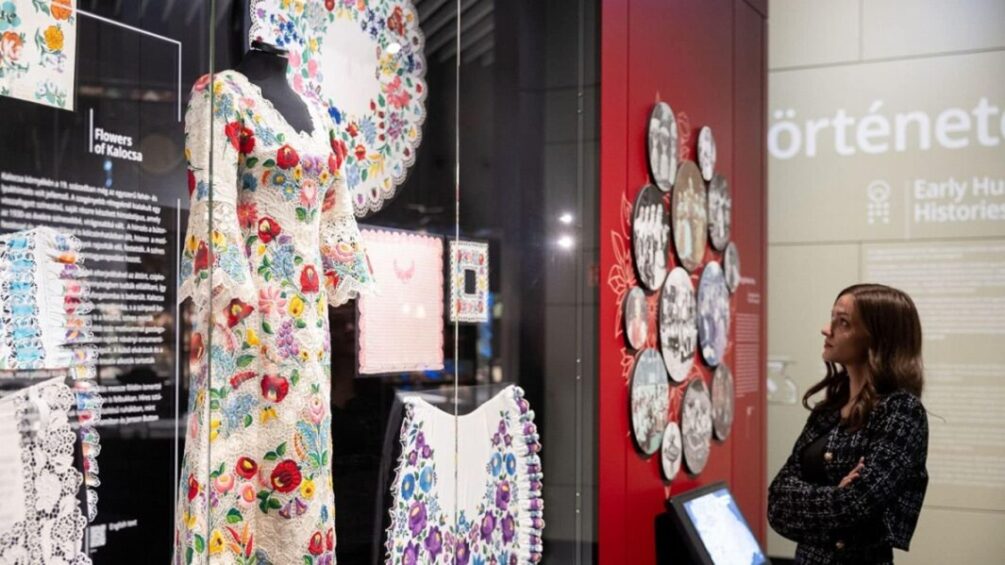
Hungarian Folk Museum of Ethnography – Arts Exhibition Embroidery Clothes
Why Visit the Hungarian Folk Museum in Budapest?
 The Museum of Ethnography is much more than a traditional folk museum. Its beautifully designed galleries bring together objects, stories and ideas from Hungary and across the world. Some exhibits are strikingly beautiful, others unusual, playful or genuinely thought-provoking. You might find yourself admiring traditional Hungarian clothing one moment and exploring the beliefs, craftsmanship or everyday objects of a distant culture the next.
There is no need to be an expert in history or ethnography. The exhibitions are designed to spark curiosity, and visitors of different ages and interests can discover something that captures their imagination.
Hungarian Folk Traditions and World Cultures
Discover Hungarian folk costumes, textiles, traditional crafts, household objects and customs that reveal how communities lived, worked and celebrated through the generations. The museum also offers a remarkable international perspective, with collections connected to Africa, Asia, Indonesia, Oceania, Europe and the Americas, including Indigenous American cultures. From ceremonial objects and masks to everyday tools and decorative arts, these collections invite visitors to consider both the differences and surprising similarities between cultures. The Collection Exhibition explores the stories behind objects and the ways museums collect and interpret them, while ZOOM presents familiar and unfamiliar objects in unexpected ways. Not every collection object is on display at the same time.Interactive Experiences – Hungarian Folk Heritage
Hungarian Folk – Museum of Ethnography
Discover Budapest’s City Park in Miniature: 3D Architectural Model – Past and Present
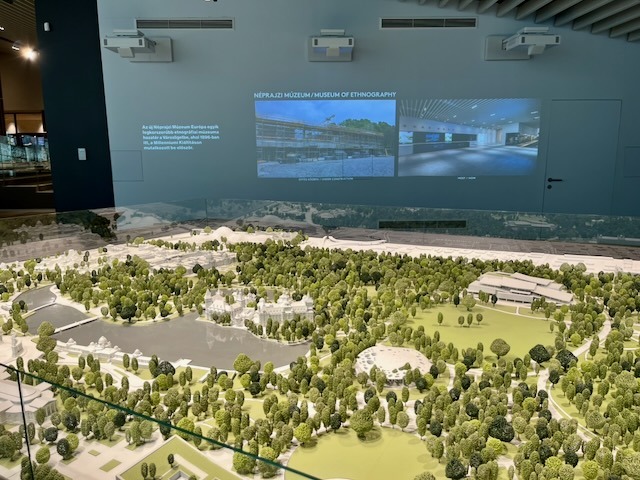 Visit the Hungarian Museum of Ethnography in Budapest’s City Park and explore a fascinating, family-friendly exhibition featuring detailed 3D miniature models of City Park (Városliget) today and during Budapest’s Golden Age around the 1900s. See how one of the city’s most famous green spaces has changed over more than a century, from its historic attractions and grand exhibition buildings to the modern park visitors enjoy today.
Can you recognise the landmarks in miniature? Look closely and play a little guessing game with your family: what is what, which buildings are still standing, and what has disappeared? Search for familiar sights such as Heroes’ Square, Vajdahunyad Castle, Széchenyi Thermal Baths and the historic exhibition grounds. Compare the miniature models of present-day City Park with those showing its appearance around the turn of the 20th century, when Budapest was celebrating its rapid growth and Hungary’s Millennium in 1896.
The models offer a wonderful bird’s-eye view of the park, making it easy to imagine the elegant promenades, historic buildings and popular attractions of Budapest’s Golden Age. Children can enjoy spotting recognisable landmarks, while adults discover surprising differences between the old and new City Park.
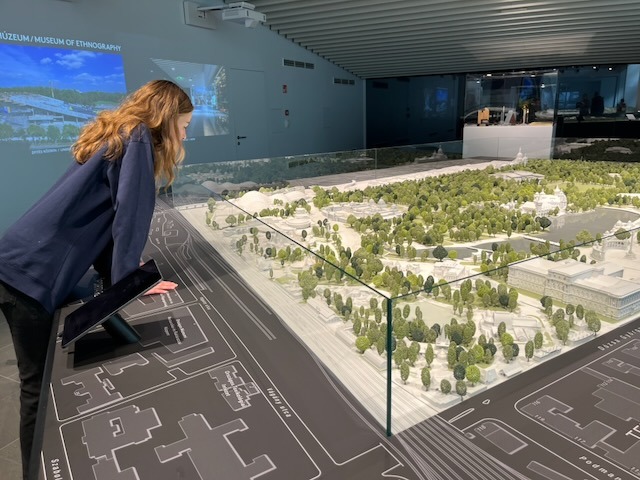
Budapest Hungarian Folk Museum of Ethnography Interactive 3D Model Map 1900s
Spectacular Architecture and Green Rooftop – Museum of Ethnography
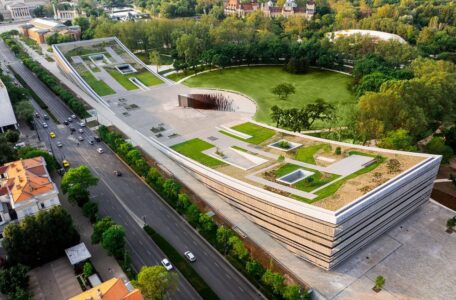
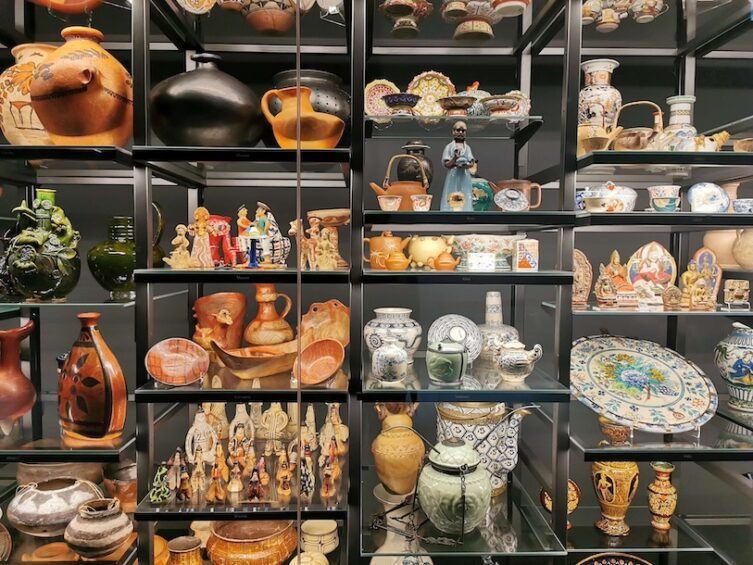
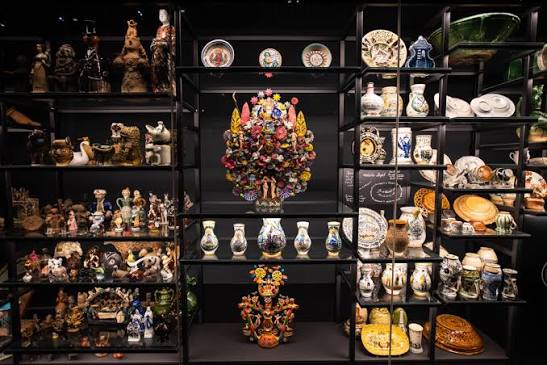
Opened in 2022, the Museum of Ethnography is one of Budapest’s most distinctive contemporary buildings. Two immense curved wings rise from the landscape, creating a dramatic structure that seems to emerge from City Park itself. Its façade incorporates decorative patterns inspired by ethnographic motifs, while the landscaped roof provides a green public space above the museum. Walk up the gently rising rooftop slopes for views towards City Park and the surrounding city. Do not miss the striking Ceramics Space, where ceramic objects from different cultures are displayed as part of the museum’s architectural experience. The building itself is well worth exploring, even before you enter the main exhibition galleries.Coffee, Cake – Cafe / Bistro – Hungarian Folk Museum
Exploring the museum can easily fill several hours, and the spacious Etno Bistro offers a convenient place to take a break. Enjoy a coffee and cake, choose a pizza or try a Hungarian-style lunch from the daily selection. With its informal, self-service atmosphere and family-friendly prices, the bistro is a welcome alternative to more formal museum restaurants. It is particularly convenient for families with children and visitors planning a relaxed afternoon in City Park. The bistro is located on the Heroes’ Square side of the building. Food choices and prices may vary.Museum of Ethnography Opening Hours
Tuesday–Sunday: 10:00–18:00 Monday: Closed, except where special opening arrangements apply.Public Holiday Opening Hours
The museum publishes special opening arrangements for Hungarian public holidays. The following is a general guide based on the published holiday schedule; please check the official museum website before visiting, as arrangements may change from year to year.| Public holiday | Museum |
|---|---|
| 15 March – Hungarian National Day | Open |
| Good Friday | Open |
| Holy Saturday | Open |
| Easter Sunday | Open |
| Easter Monday | Closed |
| 1 May – Labour Day | Open |
| Whit Monday (Pentecost Monday) | Closed |
| 20 August – St Stephen’s Day | Open |
| 23 October – Hungarian National Day | Open |
| 1 November – All Saints’ Day | Closed |
| 24–26 December – Christmas holidays | Closed |
| 31 December – New Year’s Eve | Closed |
| 1 January – New Year’s Day | Closed |


